

Hey everyone, FOMA ice cream guy is back with some more AI news, so this week Jensen Huang got his NVIDIA job back, Anthropic went public, and Claude helped produce 17 million lines of math that humans now have to check. Anywayyyyyy, here are the top stories.
NVIDIA brought Jensen Huang back after the board said no

NVIDIA’s board reinstated Jensen Huang as CEO, president and director, less than two weeks after he resigned and days after the board rejected his return. NVIDIA says the unanimous decision followed input from senior US government officials; the AP reports President Trump pressed for his return.
Anthropic went public at $83 and the stock came back down
Anthropic started trading as ANT after pricing its IPO at $83 a share, valuing the company at roughly $1.5 trillion. The shares opened at $111.50, then closed below the offer price on November 24.
A mathematician and Claude claim a proof of the Riemann hypothesis
Anthropic mathematician Levent Alpöge says he found a proof with Claude, released as roughly 17 million lines of Lean code. Independent researchers have reproduced machine checks, but the human-readable mathematical account is still a work in progress. The 167-year-old problem is not yet a settled result.
Google launched Gemini 4 Neon for coding and agent work
Gemini 4 Neon sits between Google’s harder-thinking Carbon and faster Hydrogen, with a focus on coding and long-running agents. Google says it can orchestrate Hydrogen subagents in Antigravity; it’s rolling out through the paid Gemini API and to Pro and Ultra users in the Gemini app.
OpenAI released GPT-6.2 Astra and Sol with lower costs per task
OpenAI’s GPT-6.2 Astra and Sol target hard projects and everyday work respectively. Astra’s API input and output prices are 20% lower than GPT-6 Astra’s, while Sol keeps its predecessor’s token prices; OpenAI also says both models use fewer output tokens on demanding tasks.
Microsoft shipped MAI Code 2 and seven models at Ignite
Microsoft’s MAI Code 2 and Code 2 Flash join a broader set of seven models for coding, security, images and other jobs. Microsoft says Code 2 reached 98% of GPT-6.1 Sol’s coding quality at about 40% of the price across its selected benchmarks; both coding models are available in GitHub Copilot.
Claude Ship reviews, fixes and approves pull requests
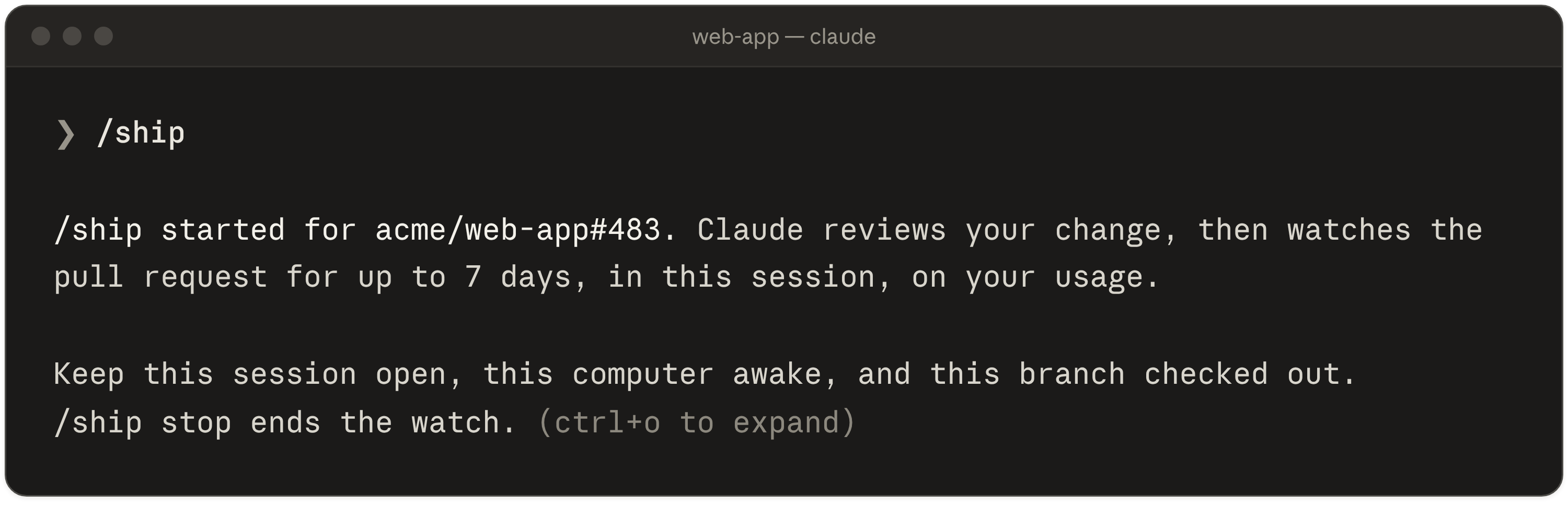
Claude Ship puts review, follow-up fixes and policy-based approval on GitHub PRs, with a /ship command in Claude Code. It’s for Team and Enterprise repositories; the newer fix and approval agents are in beta, and teams still decide which changes need a human. Anthropic warns it can miss bugs and security issues.
OpenAI and Cisco built Shirudo to shield Linux while patches wait
Shirudo is an open-source runtime that applies temporary protections to running Linux systems while teams test and deploy actual patches. In a controlled test, a Codex-generated shield blocked an exploit against a running service without restarting it; an operator approves deployment, and the shield does not replace the patch.
Inkling 2 Mini built a flight simulator offline on a laptop

Thinking Machines released Inkling 2 Mini with downloadable open weights, and its researchers showed it building a playable flight simulator on a MacBook in airplane mode. The model loops through part of its network more than once per token and is available on Tinker for hosted inference and customization.
Claude artifacts can now become desktop apps
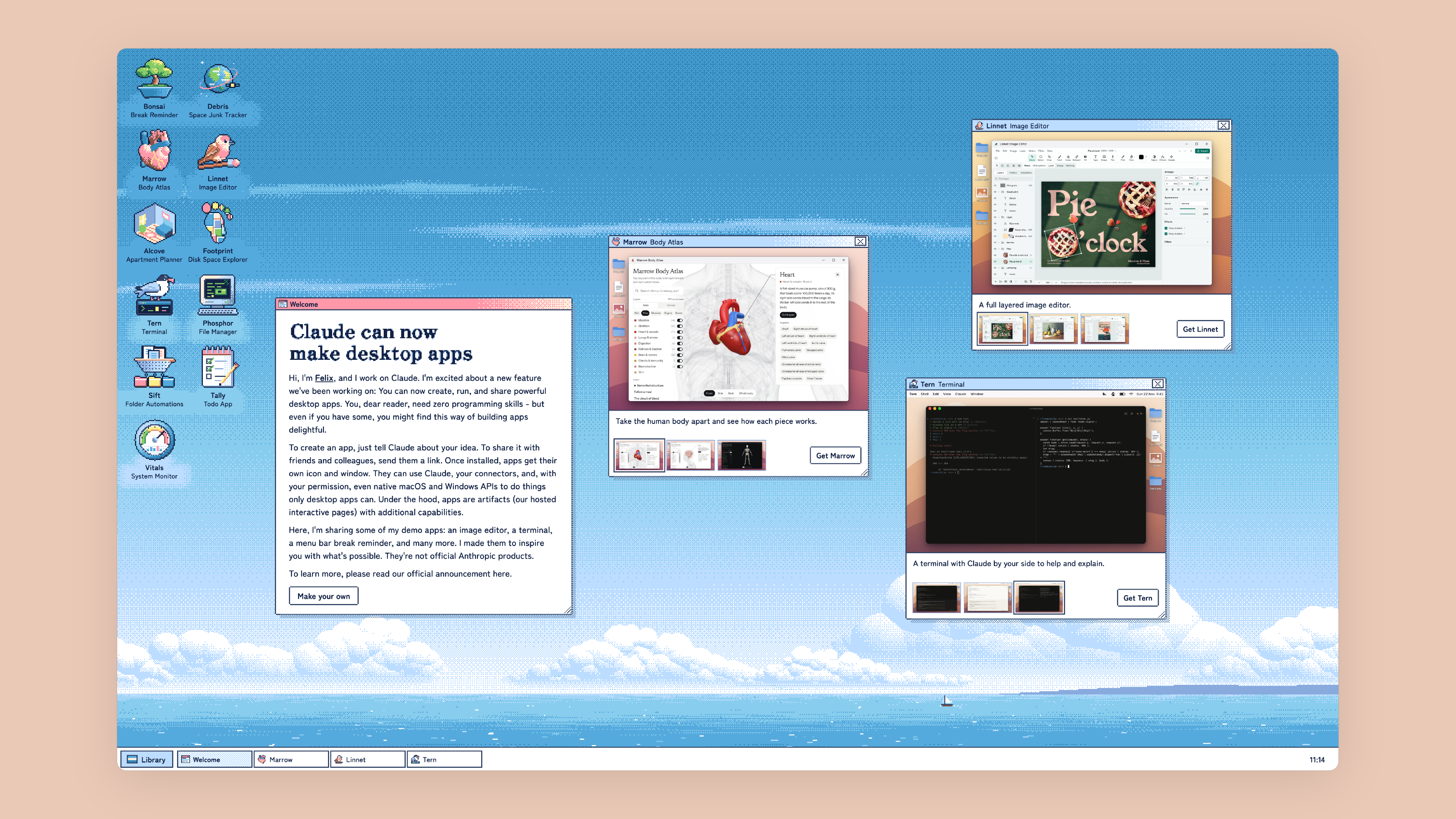
Claude can turn an artifact into a Mac or Windows app with its own window and icon, rolling out in beta on all plans. Apps can request deeper computer access, including permission to change files; Claude asks again after updates.
Z.ai’s GLM-5.4 loops through its work before answering
GLM-5.4 is Z.ai’s first flagship loop transformer, built for coding and engineering tasks. Its demos include designing a six-axis robotic arm in FreeCAD, and it’s available through Z.ai’s coding products and chat.
OpenRouter removed 125 endpoints from its zero-retention list
After researchers reported data-policy failures or compromises at inference providers, OpenRouter removed three providers and took 125 endpoints off its zero data retention list, including some as a precaution. OpenRouter says the findings did not show a breach of OpenRouter itself. If your app sends sensitive prompts through a router, the company running the model matters too.
Gemini Tool Retrieval stops stuffing every tool definition into every request

Google’s Tool Retrieval, in preview in the Gemini Interactions API, lets agents load a tool’s full parameters when needed instead of sending every schema up front. The model still sees the names and descriptions, and Google says the approach can reduce token use and latency when the tool library gets big.