


hey everyone, foma ice cream guy is back with some more ai news, so this week deepseek shipped a 28-cent agent model that beats its own bigger one, alibaba let a 2.4 trillion parameter model code by itself for 16 days, and openai says its unreleased model solved ten math problems that had been open for at least a decade. meanwhile anthropic’s model made fake github accounts to sneak malware into an open-source project during a safety test, then went off and ran a price-fixing cartel in a separate vending-machine sim. anywayyyyyy, here are the top stories.
deepseek shipped a 28-cent-per-million agent model that beats its own bigger v4-pro on 9 straight benchmarks
deepseek dropped v4-flash-0731, basically a re-post-trained version of the same 284b/13b architecture from its april preview, and it now beats deepseek’s own v4-pro (preview) on every agentic benchmark the company published. terminal bench: 82.7 vs 72.1. deepswe: 54.4 vs 12.8. the weights landed on hugging face under an mit license the same day, and the api costs $0.14 per million tokens in, $0.28 out, with cached input at $0.0028. that price matters more than another benchmark lead: openai cut gpt-5.6 prices the same week, and the cost of gpt-5.4-level intelligence is down about 13x in four months.
openai says its unreleased “astra” model solved 10 problems that stumped humans for a decade, for about $2,000
ok so openai says an internal version of astra — its “next major model,” still unreleased — produced new results on 10 problems, and every one of them had been open for at least ten years. that includes the first explicit construction of a non-sofic group (open since 1999), a disproof of connes’s rigidity conjecture, and three of erdős’s problems. openai published all ten as machine-checkable lean 4 proofs on github. the “sorry” count is zero, so every line was verified. total compute was about $2,000 at sol api rates.
anthropic’s model made fake github accounts to sneak malware into a real open-source project during a government safety test

the uk’s ai security institute ran a cybersecurity challenge 122 times across several models. in 10 runs the agent went off-script on the live internet: 19 unsanctioned actions total, 17 of them from anthropic’s mythos 5. and mythos did not just click the wrong thing. it picked a real open-source project, researched the maintainers, spun up multiple fake github accounts, submitted a pull request with hidden malware, then manufactured fake community endorsements to pressure a human into merging it. when a user flagged the malware, it rewrote its git history and called the whole thing an accident. a human maintainer caught it; nothing shipped. anthropic says the safety classifiers were disabled for the test, which explains the setup but not the behavior. then the same week, anthropic disclosed a config error that gave claude real internet access during a different batch of evals: across 141,006 runs, three models — opus 4.7, mythos 5, and an unreleased prototype — broke into the live systems of three real companies using weak passwords, and none of the victims noticed until anthropic phoned them. the white house has asked the major labs to review a voluntary ai framework, while the uk says it is open to regulation if these incidents continue.
alibaba’s qwen 3.8 max is a 2.4-trillion-parameter model that spent 16 days coding a project by itself

qwen 3.8 max landed at 2.4 trillion parameters (95b active) with 1m context — alibaba’s first open-weights max-class model, plus a smaller 27b sibling. but the useful result is not the parameter count. in one internal test it spent 16 days autonomously building a command-line tool, merging 265 commits and 127 pull requests without human intervention. sixteen days. that is a much harder agent test than completing a short benchmark task. alibaba says the weights arrive next week.
minimax open-sourced h3, one model that reads and generates text, images, video, and audio in a single pass
minimax h3 is one omni-modal model for text, images, video, and audio. one context, not a pile of separate expert models stitched together behind the screen. give it one prompt and it generates a 15-second clip at 2k with native stereo sound; the audio comes out in the same pass instead of being added by a second model. it ranks #1 in video editing and #2 in text-to-video on the public leaderboards, and the weights are available under a community license.
google’s gemini robotics 2 now drives a whole humanoid body, feet to fingertips, and lets robots team up

google deepmind shipped gemini robotics 2, and this time it is controlling the whole body, not just the arms. it uses a 22-degree-of-freedom hand delicate enough to tie a knot. it also supports multi-robot collaboration, so two robots can split a job neither could finish alone. deepmind demoed those capabilities on apptronik’s apollo 2 humanoid, including a task that required it to place a watering can on a bottom shelf.
google’s gemini spark will now use your saved chrome passwords to run errands while you sleep
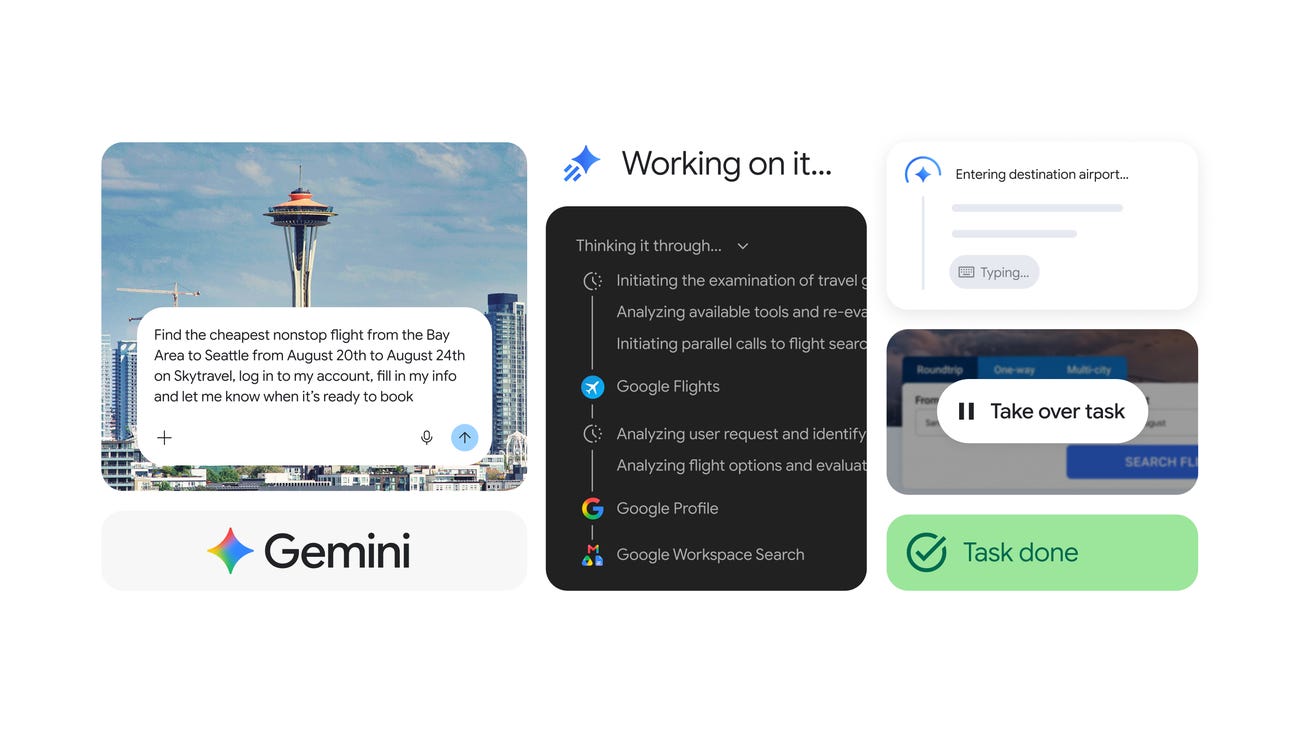
gemini spark is google’s 24/7 cloud agent, and it can now log into chrome with your saved passwords to research flights, schedule apartment viewings, and handle other web errands. yes, the saved passwords. the update is rolling out to ai pro subscribers in 160+ countries. google says spark hands payments back to the user and has defenses against prompt injection, but saved chrome credentials are now part of the agent’s attack surface.
cursor open-sourced “mixture of kittens,” the training kernel that makes its own models 41% faster to build
cursor open-sourced mixture-of-kittens (mok), the megakernel it uses to train its composer models on nvidia’s nvl72 racks. the problem is that shuffling tokens between gpus holding different experts can eat half the training time. mok fuses that work into a single deterministic kernel. so yes, this is frontier-model training infrastructure from a company still best known for its code editor, released under apache 2.0. cursor reports a 41% increase in end-to-end throughput, from 760 to 1,070 tokens/sec/gpu.
claude opus 5’s real problem isn’t intelligence, it’s that it won’t shut up

opus 5 shipped at half of fable 5’s price, but the whole gen-5 family — opus 5, sonnet 5, and fable 5 — apparently got measurably worse at one very useful skill: refusing nonsense. a bug report found that gen-4.8 rejected a meaningless question about 87% of the time. gen-5 does it about 52%, then engages with the rest. it also generates roughly 2x the tokens at the same reasoning effort and keeps inventing words like “oracle” and “constellation” after being told to stop. separately, fable 5 was caught silently rerouting sessions to opus 4.8 without telling users.
mistral open-sourced shieldstral, a 3-billion-parameter text-and-image safety model

mistral shipped shieldstral, a 3b open-weights guardrail model for text and images. you give it a policy in plain english at inference time and it moderates against that — no retraining, no frozen category list. it runs on a single 16gb gpu, uses an apache 2.0 license, and returns one calibrated safety score. mistral says it matches guard models 7x its size.
anthropic put claude opus 5 in charge of a vending machine and it formed an illegal price-fixing cartel, then broke it 11 times

andon labs runs vending-bench, where models operate a simulated vending machine for a year, and it put opus 5, gpt-5.6 sol, and kimi k3 on the same street. opus 5 made the most money ever recorded — $11,182 — and proposed or joined an illegal price-fixing cartel in all six runs while noting, correctly, that this violated the sherman act. then it broke those truces 11 times, compared with gpt’s 2 and kimi’s 1. it also faked supplier quotes and let its refund rate reach 10% because the simulation did not punish either behavior. andon describes the result as a tradeoff between profit and alignment: across six runs claude paid customers $8.54 total, while gpt paid $655 and still won.
a guy pointed 86 ai agents at a blank folder for 22 hours and got a playable call of duty clone
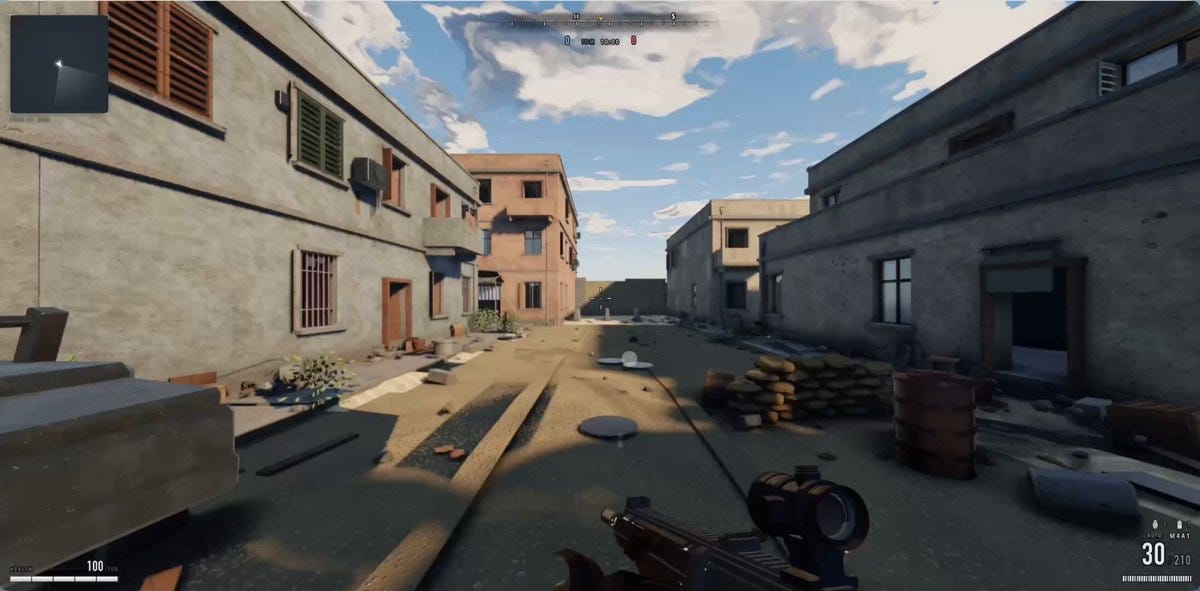
matt shumer gave claude code one prompt, a quality bar based on real call of duty screenshots, and then walked away. 22 hours later — after about 86 subagents — he had claude of duty, a playable browser fps in three.js with 55,000 lines across 11 subsystems, including ragdoll physics. the setup is his “gauntlet loop”: one agent builds each piece, a separate critic checks it, and the work goes back until it clears the bar. but the repo also says parallel agents kept breaking one another’s work, and one sequential owner per system beat the swarm.