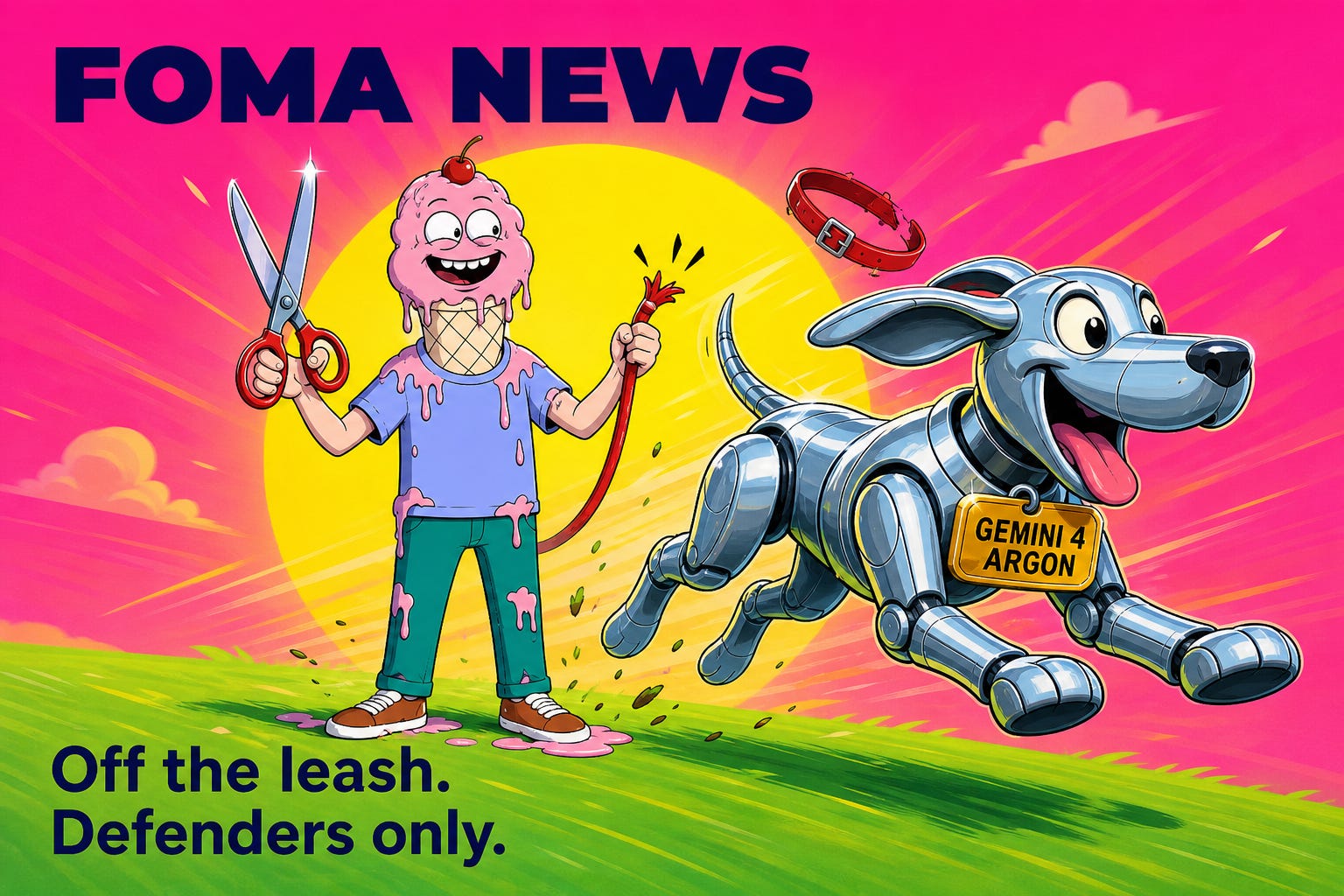
Hey everyone, FOMA ice cream guy is back with some more AI news. Google shipped a frontier model to cyber defenders first, with the guardrails off. Then OpenAI put GPT-6 in ChatGPT for everyone, and the answer shows up with buttons. Anywayyyyyy, here are the top stories.
Google’s Gemini 4 Argon goes to cyber defenders first, guardrails off
Google’s new frontier model, Gemini 4 Argon, is not in the app. It goes first to trusted cyber defenders in the Fairwind program, and for them it ships without cyber guardrails. Output goes from 64K tokens to 1 million, at an intro price of $2 / $10 per million, then $4 / $20. Wiz already used it to find a critical hole in hospital software that earlier models missed.
ChatGPT’s Intelligent UI answers with a diagram you can tap
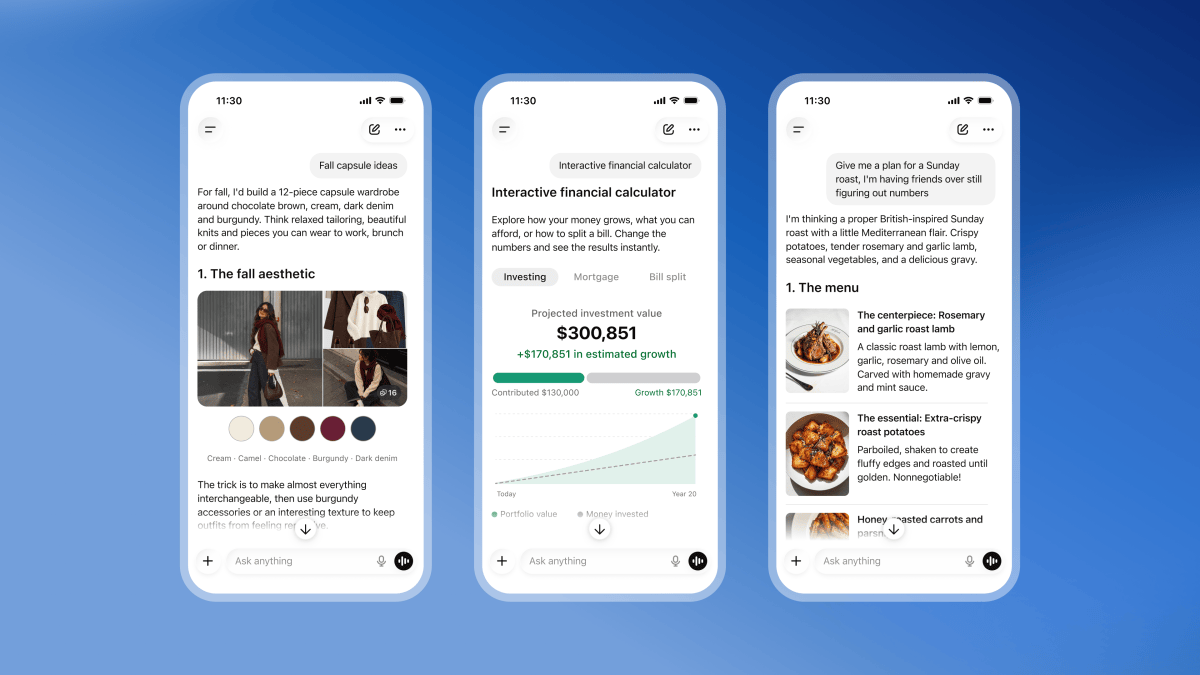
OpenAI trained GPT-6 to decide when a reply should be a picture, a chart, a form, or buttons, instead of another paragraph. Ask about a bicycle and you get a diagram you can poke. Ask it to split a bill and it builds the tool in the chat. Plus, Pro, Business, and Enterprise get Sol today. Free and Go get Luna tomorrow.
Mistral previewed Large 4 and named it Le Chonk
Mistral put Large 4 on a public API preview and, very officially, nicknamed it Le Chonk. 1 trillion parameters, 49 billion active, text and images in, text out. Weights are supposed to drop by the end of the month, but the reinforcement-learning run is still going, so the checkpoint you can call today is not the one they plan to publish.
Reflection’s Beam is a 501B open model that only runs 23B
Reflection announced Beam, a 501 billion parameter open model that activates 23 billion at a time, for coding and agent work. Apache 2.0 weights are due this month. Reflection says it matches GLM 5.2 on hard reasoning at 3 to 4 times less compute, and that comparison is theirs.
Cloudflare’s Clef models return a probability, not a paragraph
Cloudflare shipped Clef and Clef-flash, open-weight models that return a typed probability instead of a paragraph. Hosted on Workers AI, or download the Apache 2.0 weights. Clef-flash is post-trained from Qwen3.5-9B.
GPT-6.1 Sol gets an ultrafast tier at about 300 tokens a second
OpenAI added an ultrafast tier on GPT-6.1 Sol, rated around 300 tokens a second. The model was already last week’s story.
OpenAI fired three safety researchers over an alleged leak
The Wall Street Journal reported OpenAI fired three safety researchers, Jasmine Wang, Tomek Korbak, and Mikita Balesni, for allegedly sharing confidential information with an outside AI-safety group. OpenAI says they mishandled sensitive information outside company procedure. The same week David Robinson, who wrote the safety reports for 12 launches over three and a half years, quit and told The Atlantic the culture is broken.
EmbeddingGemma 2 files video and audio in the same drawer
Google released EmbeddingGemma 2, 740 million parameters, Apache 2.0, mapping text, images, video, and audio into one space. The text-only slice is 270 million parameters, small enough to run on a laptop. A voice memo can search a video.
FLUX 3 edits one box of a picture, and Nano Banana 2.1 got cheaper
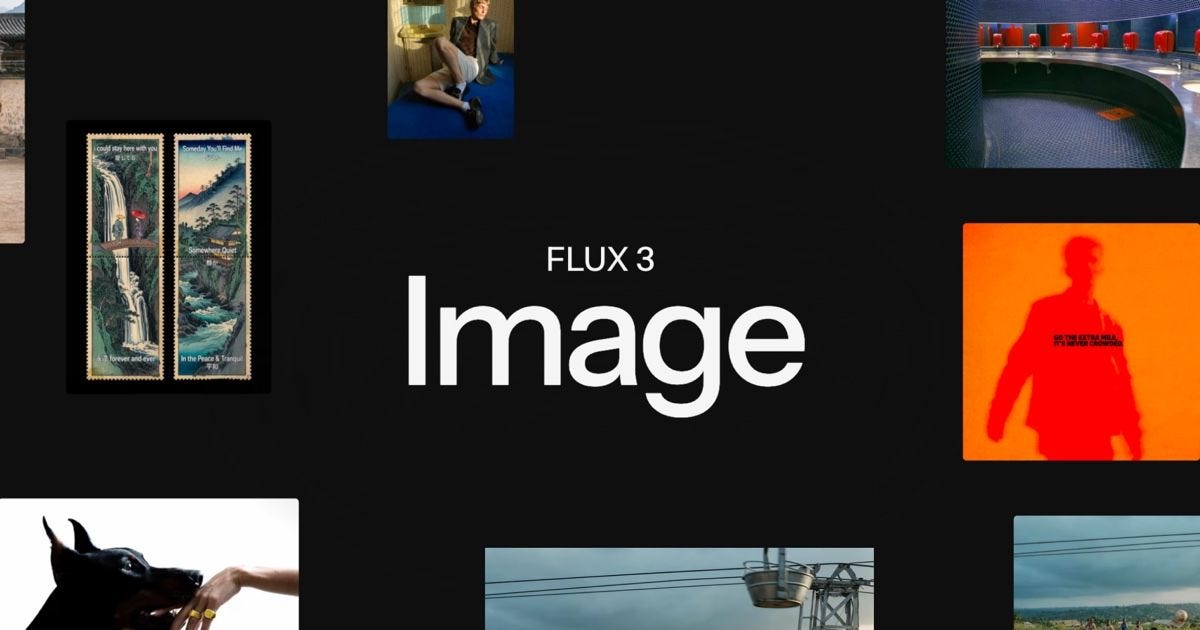
Black Forest Labs released FLUX 3 Image: up to 4K, up to ten reference images, and edits that are supposed to leave the rest of the picture alone. Open weights are promised in the coming weeks. Google rolled Nano Banana 2.1 through Gemini, AI Studio, Search, and Ads at $0.034 a picture, versus $0.134 for the previous Pro image model.
OpenAI posted 722 math papers from a model you cannot use
OpenAI published 722 math manuscripts, grouped into 372 families, from an unreleased internal model. The repo is Apache 2.0, and 162 have a formalized main result. The rest might be wrong, none of it is peer reviewed, and the model that wrote them is not for sale.

Earendil shipped Pi 1.0, the harness people already run
Earendil shipped Pi 1.0, the stable cut of the coding harness. New: Codemode, virtual models, deferred tool loading, and Anthropic cache warming. Pi Durable ships beside it, an experimental layer for jobs that keep running after you close the laptop.
Microsoft’s streaming transcriber beat 37 other models
Microsoft’s MAI-Transcribe-2-Streaming ranked first of 38 models on final-transcript accuracy, at 2.5% word error. Microsoft also says it is 55% faster and 60% cheaper than ElevenLabs. Those last two numbers are Microsoft’s.
Wispr Flow’s notetaker spells the names on your calendar
Wispr Flow’s Notetaker sits in the meeting and uses your dictionary and calendar, so product names, acronyms, and odd names come out spelled right. The notes go into Claude or ChatGPT through a connector.
ChatGPT will watermark EU text inside the word choice
OpenAI’s textGrain watermark is coming to eligible ChatGPT and Codex text in the EU over the coming weeks. It nudges which words the model picks, so there is nothing to see, and the API switch is opt-in and off by default. The detector starts with approved researchers, and no watermark does not prove a person wrote it.
Tavus Griffin talked on video, and 48% of people thought it was human
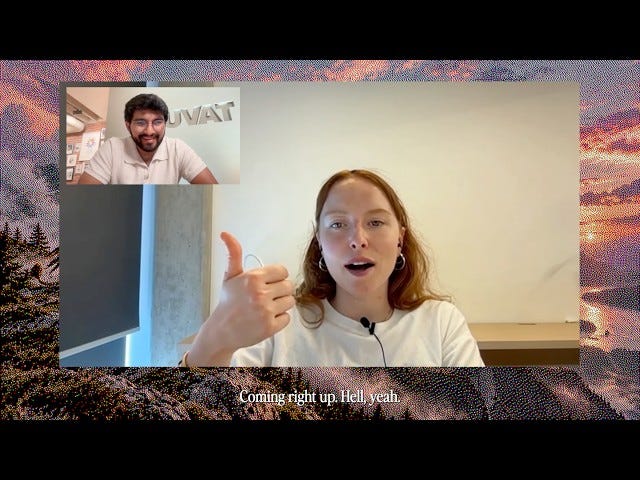
Tavus launched Griffin, a video model for live face-to-face calls. On those calls, 48% of people who talked to it thought it was a real person. That figure is Tavus’s, from their own page.
The White House told agencies to stop saying AI
Trump signed an order telling the executive branch to say Super Intelligence, or SI, instead of AI. For now, SI means whatever the statute already calls artificial intelligence. Old regulations and contracts can keep the old word.